What Visa’s Fee Rethink Means for Your Wallet
Visa’s fee overhaul could change what you pay and earn—find out how your wallet may be affected
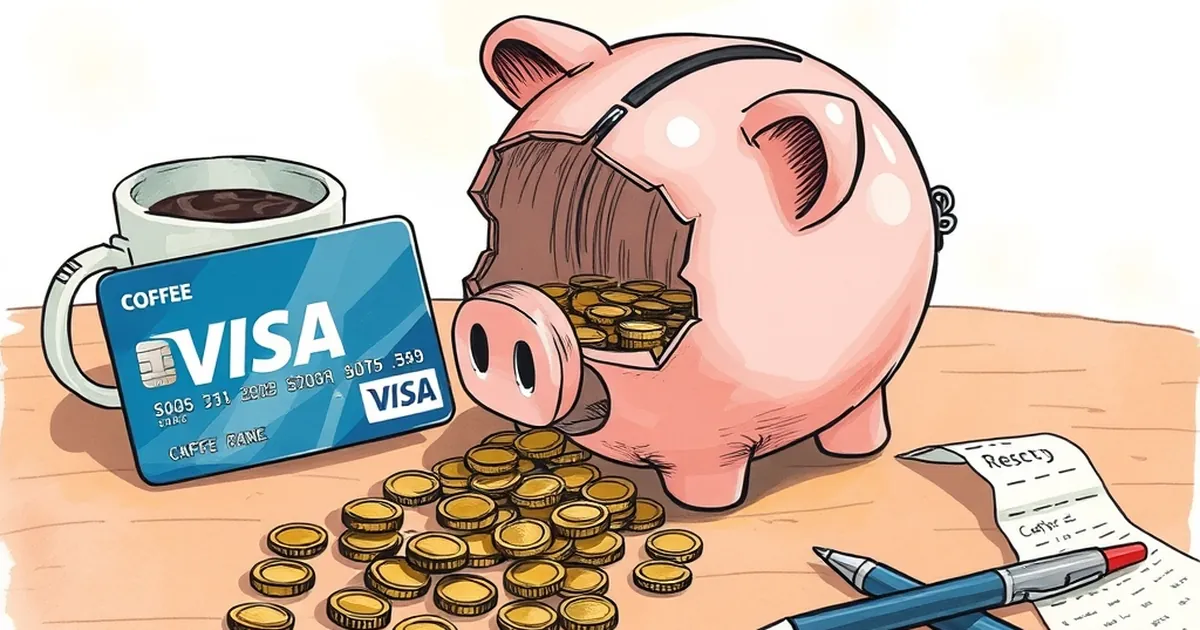
You swipe your card, tap your phone, or click “pay now” — and somewhere in the background, Visa gets a cut. That’s always been the deal. But now, Visa is publicly rethinking how it charges for that privilege, and the implications could ripple straight into your monthly budget. The question isn’t just about Visa’s bottom line. It’s about whether you’ll pay more at the checkout, earn fewer rewards, or finally see some relief from the silent tax on every transaction.
The Old Model: Why You Never Saw the Fee
Most people don’t realize that every time they use a credit or debit card, a fee changes hands behind the scenes. Merchants pay what’s called an interchange fee — typically 1.5% to 3.5% of the transaction — to the card-issuing bank. Visa and Mastercard set the rules and take a smaller slice for themselves.
You never see this fee directly. But you feel it. Merchants build these costs into their prices, meaning everyone — even cash customers — subsidizes card rewards. For years, Visa’s model was simple: charge more for premium rewards cards, encourage banks to issue them, and watch transaction volume grow. It worked beautifully for them. For your wallet? It’s been a mixed bag.
What Visa Is Actually Proposing
Visa isn’t scrapping interchange fees overnight. That would be a multi-billion-dollar earthquake. Instead, they’re signaling a shift toward volume-based pricing and digital product fees that could fundamentally change how your payment behavior is monetized.
New Tiers for Digital Wallets
One of the biggest changes on the table involves digital wallets like Apple Pay, Google Pay, and Samsung Pay. Currently, Visa charges roughly the same rate whether you tap a physical card or use a phone. Under the new structure, they may introduce lower fees for tokenized digital transactions — but only if the bank agrees to certain data-sharing terms.
The catch? Banks might pass those savings — or lack thereof — directly to you through higher annual fees or reduced rewards. If your bank signs on for the cheaper digital rate, you might keep your cashback. If they don’t, don’t be surprised if your points earning rate gets quietly trimmed.
Volume Discounts for Big Merchants
Visa is also exploring tiered pricing for large merchants. Think Walmart, Amazon, or your national supermarket chain. If they process billions in Visa volume, they could negotiate a lower effective rate. In theory, that could mean lower prices for you. But in practice, those savings rarely flow straight to the checkout aisle — they usually go to shareholder dividends or operational investments.
How This Hits Your Everyday Spending
Let’s get concrete. Imagine you’re buying a $100 pair of shoes online using a premium Visa card that earns 3% cashback. Under the current system, the merchant pays roughly $2.50 in interchange fees. Your bank gets $2.00, Visa gets $0.20, and you get $3.00 back. Everyone’s happy — except the merchant, who silently raised shoe prices by 2% across the board to cover costs.
Now imagine Visa’s new model: the merchant pays $1.80. Your bank’s revenue drops to $1.40. To maintain profitability, your bank cuts your cashback to 2%. You now earn $2.00 instead of $3.00. The merchant keeps the extra $0.70. You’re worse off.
I saw this play out firsthand last year when a friend’s credit union quietly dropped its 2% unlimited cashback card to 1.5%. The stated reason? “Network fee structure changes.” That was Visa’s influence, even if the name wasn’t on the letter.
The Global Ripple Effect
Visa operates in over 200 countries, but local regulations vary wildly. In Europe, the EU capped interchange fees at 0.3% for credit cards years ago. Visa’s rethink there looks different — they’re focusing on value-added services like fraud prevention and data analytics. In Australia, regulators are actively reviewing the entire payment system. Visa’s proposals in one market often become templates for others.
For you as a global consumer, this means the changes might hit unevenly. If you live in a regulated market like the EU or India, you might see slower shifts and more consumer protections. If you’re in the U.S. or parts of Latin America with lighter oversight, expect faster experimentation — and potentially more aggressive fee structures disguised as “innovation.”
The Hidden Winner: Fintechs and Neobanks
Here’s where it gets interesting. Visa’s fee rethink could actually benefit smaller players like Revolut, Nubank, or Chime. These fintechs often operate on thinner margins and rely on interchange revenue to offer free accounts. If Visa lowers fees for digital-first banks, those savings could be passed on to you through lower foreign transaction fees or better exchange rates.
But there’s a flip side. If Visa raises fees for premium rewards cards, traditional banks may pull back on high-end perks. That first-class lounge access and travel insurance you love? It could become a paid add-on rather than a card benefit. The fintechs, meanwhile, will likely double down on no-frills, low-cost products that appeal to budget-conscious spenders.
What You Can Actually Do About It
You can’t vote on Visa’s board meetings, but you can vote with your wallet. Start by checking your card’s terms — most banks bury fee change notices in fine print. If you see your rewards rate dropping, call and ask why. Be specific: “Is this due to a Visa network fee change?” You’d be surprised how often customer service will confirm it.
Consider diversifying your payment methods. Keep one premium Visa for travel perks, but use a low-cost debit card or a local payment scheme (like UPI in India or Pix in Brazil) for everyday purchases. These systems often have near-zero merchant fees, meaning merchants have no incentive to raise prices on those transactions.
Also, watch for Visa’s quarterly earnings calls. They’re publicly available and often reveal fee structure changes before they hit your statement. If you hear executives talking about “value-based pricing” or “network optimization,” that’s code for “your costs are about to change.”
The Forward Look
Visa’s fee rethink isn’t a one-time event — it’s the opening move in a long game. Over the next three to five years, expect payment costs to become more transparent, more varied by merchant size, and more tied to how you pay rather than what you pay for. The era of a single, universal interchange rate is ending.
Your best protection is awareness. Know what your card costs the merchant. Know what your bank earns from you. And never assume that a rewards card is “free money” — it’s always paid for by someone. In the new Visa landscape, that someone might finally be you, more directly than ever.
Stay curious, check your statements, and don’t be afraid to switch cards when the math stops working in your favor.