Self-exclusion signup takes 3 minutes, reversal takes 7 days
Self-exclusion signup takes three minutes while reversal takes seven days, revealing a deliberate design that shapes how gamblers experience regulation
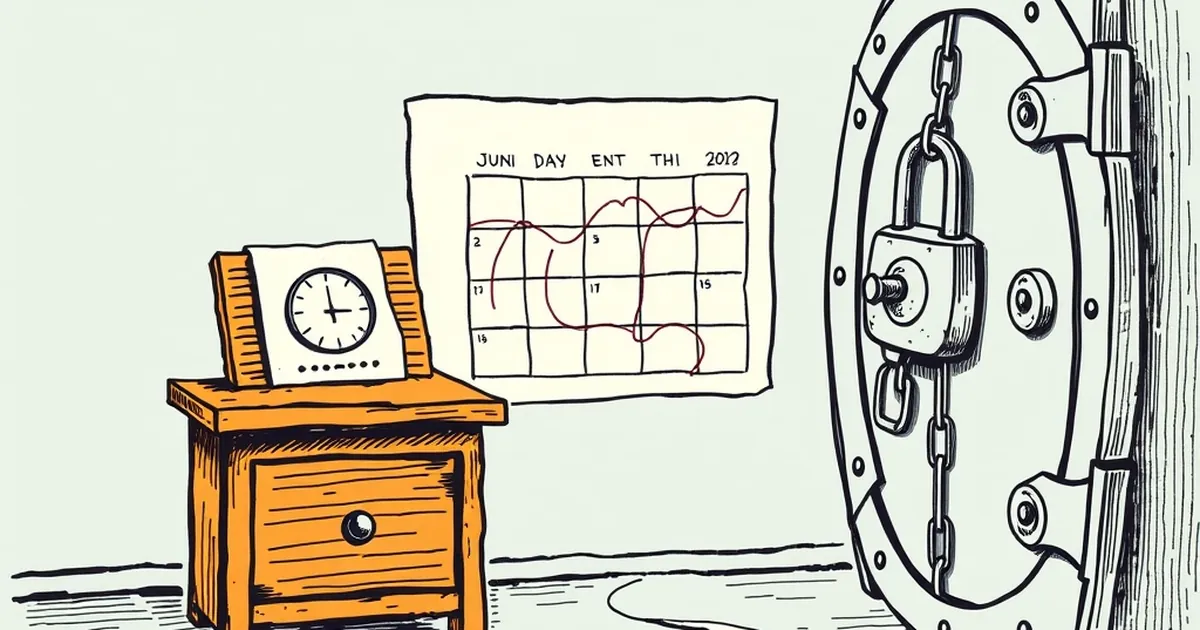
Signing up for self-exclusion at most regulated online casinos takes about three minutes. Getting that exclusion lifted takes a week. That asymmetry isn't a bug in the system — it's the whole design, and depending on which side of it you're on, it's either the most sensible thing about gambling regulation or the most quietly cruel.
The three-minute figure isn't marketing copy. It's roughly what you'd spend filling in a form: pick a duration (six months, one year, five years, or indefinite in most jurisdictions), confirm you understand the terms, tick a box, hit submit. Some operators add a cooling-off confirmation screen. A few require you to type a sentence confirming your intent. Even with those friction points, you're done before your coffee cools. The seven-day reversal window is harder to pin down because it varies — 24 hours in some markets, 48 in others, a full seven days in the UK under Gambling Commission rules, and "at our discretion" in a handful of places that shouldn't be allowed to say that.
Why the asymmetry exists
Regulators built self-exclusion on a simple premise: the decision to stop is usually made in a bad moment, and bad moments don't produce reliable long-term commitments. Someone who's just lost rent money at 2am is not the same person who wakes up at 9am and wants their account back. The gap between those two people is the entire justification for a delay.
The logic holds up better than most gambling policy. Problem gambling is characterised by exactly the kind of impulsivity that a reversal button would exploit. If you can undo a self-exclusion in ninety seconds, you haven't really excluded yourself — you've added a speed bump to a road you're still driving on. Operators know this. So do the people who write the rules.
What's less discussed is who the delay protects. It's not just the player. A seven-day window also protects the operator from the accusation that it let someone gamble immediately after they'd asked to be blocked. That's a reputational and legal shield as much as a harm-reduction measure, and pretending otherwise is naive.
The mechanics nobody reads
Here's where it gets practical. Self-exclusion is not a single system. It's a patchwork.
In the UK, the GamStop scheme covers most licensed operators — one signup, and you're blocked across hundreds of sites. In other markets, you're excluding yourself from one brand, or one group of brands under a single licence. Sign up for self-exclusion at Casino A and you may still be able to open an account at Casino B, which is owned by the same parent company, on the same afternoon. Some groups apply exclusions across their whole portfolio voluntarily. Others don't, and there's no universal requirement that they do.
That gap is where a lot of the real damage happens. A player who genuinely wants to stop will often find that the three-minute form they filled in covers less ground than they assumed. The reversal delay, meanwhile, applies everywhere they did manage to exclude themselves.
The seven days, in practice
Let's take the UK as the clearest example, because the rules are explicit. Under licence conditions, operators must wait at least seven days after a player requests to reverse a self-exclusion before allowing them to gamble again. During that period, the operator is expected to contact the player — usually by email or phone — to confirm the decision and, in theory, to offer information about support services.
In practice, that contact is often a formality. A templated email, a link to a helpline, a checkbox. The seven days pass, the account reopens, and the player who asked to be blocked two months ago is back in.
The delay does do something, though. Seven days is long enough for a craving to pass, for a payday to come and go, for someone to talk to a partner or a friend. It's not a cure. It's a pause, and pauses matter more than the industry likes to admit and less than its critics claim.
Some jurisdictions have gone further. In certain Australian states, self-exclusion can be extended or made harder to reverse. In parts of Scandinavia, the national monopolies tie exclusion to a central register with stricter reversal conditions. The trend, slowly, is toward longer delays and broader coverage — but it's uneven, and a player in one country can face a seven-day wait while a player two hundred miles away faces twenty-four hours.
What the numbers actually say
Concrete figures on self-exclusion reversal are thin, partly because operators don't publish them and partly because the people who reverse successfully are the ones least likely to answer a survey about it. What we do have: research from the UK suggests that a meaningful share of self-excluded players — often cited around a third — attempt to gamble elsewhere during their exclusion period, and a smaller but real proportion use a different operator entirely. That's not a failure of self-exclusion. It's a failure of coverage, and it's the strongest argument for centralised registers over brand-by-brand schemes.
The three-minute signup and seven-day reversal are, in effect, two halves of the same policy. One makes it easy to ask for help. The other makes it hard to take the request back on a whim. Both are defensible. Neither is sufficient on its own.
Where the design gets uncomfortable
There's a genuine tension here that doesn't get resolved by pointing at the rules.
For a player in crisis, a seven-day wait to reverse an exclusion is a feature. For a player who made a decision in anger, or in a moment of anxiety, or because a relative pressured them into it, the same wait can feel like a trap. The system assumes that the person who signed up and the person who wants back in are the same person at different levels of clarity — and that the first one was right. Usually that's true. Not always.
There's also the question of what happens during the seven days. A player who wants to reverse an exclusion is, by definition, in a state where they're thinking about gambling. If the operator's only contact in that window is a templated email, the delay is doing administrative work, not therapeutic work. The rule creates space for intervention. It doesn't guarantee any.
Regulators have largely chosen to accept that trade-off. The alternative — a fast reversal — would undermine the entire point of self-exclusion, and the evidence from jurisdictions that tried it is not encouraging.
What to take from it
If you're considering self-exclusion, the three minutes is the easy part, and it's worth knowing exactly what you're signing up for: which sites it covers, how long it lasts, and what the reversal process actually looks like before you need it. Read the confirmation email. Check whether it applies across a group or just one brand. If your jurisdiction has a central register, use it — brand-level exclusions leave more doors open than most people realise.
The seven-day reversal isn't going anywhere, and it probably shouldn't. But the gap between a three-minute commitment and a seven-day undo raises a question the industry hasn't answered: if the signup is fast because speed helps people in crisis, why is the reversal slow in a way that assumes the same person is now acting in bad faith? Both can't be true at once, and the fact that we've built a system on that contradiction is worth sitting with.